
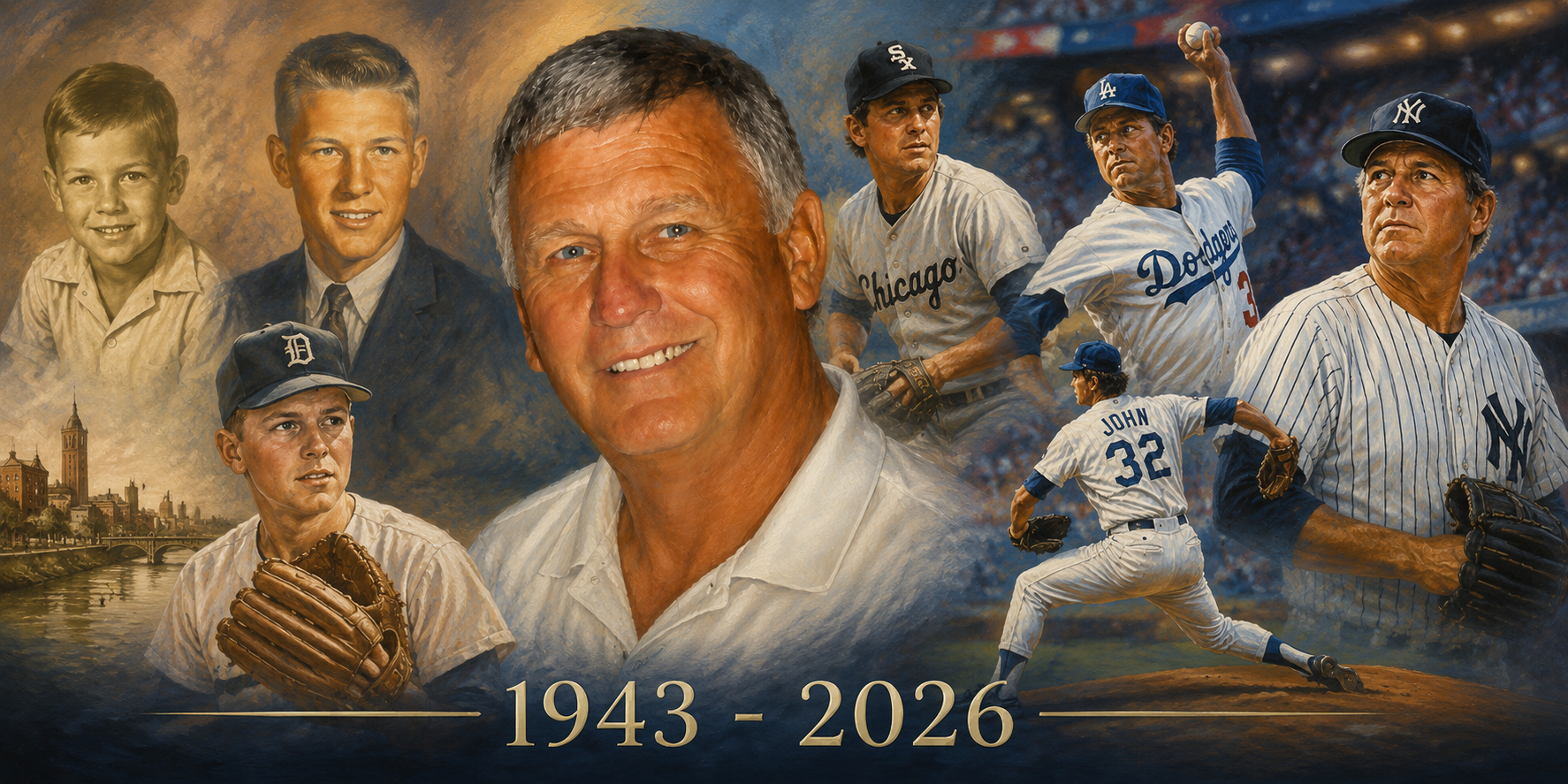
Thomas Edward John was born May 22, 1943, in Terre Haute, Indiana, and grew up there as an exceptional student and athlete. At Gerstmeyer High School, he excelled in both baseball and basketball. He went 28–2 as a high school pitcher, once scored 47 points in a basketball game, and graduated as valedictorian in 1961. A stutter kept him from delivering the traditional valedictory address. Although the University of Kentucky recruited him to play basketball, John chose professional baseball, signing with the Cleveland organization after high school. He also attended Indiana State University.
John reached the major leagues with Cleveland on September 6, 1963, at age 20. After two seasons, he was traded to the Chicago White Sox, where the young left-hander developed into an established major-league starter. He tied for the American League lead with five shutouts in 1966 and led the league with six in 1967. His success was built less on overpowering hitters than on command, movement and an ability to induce ground balls.
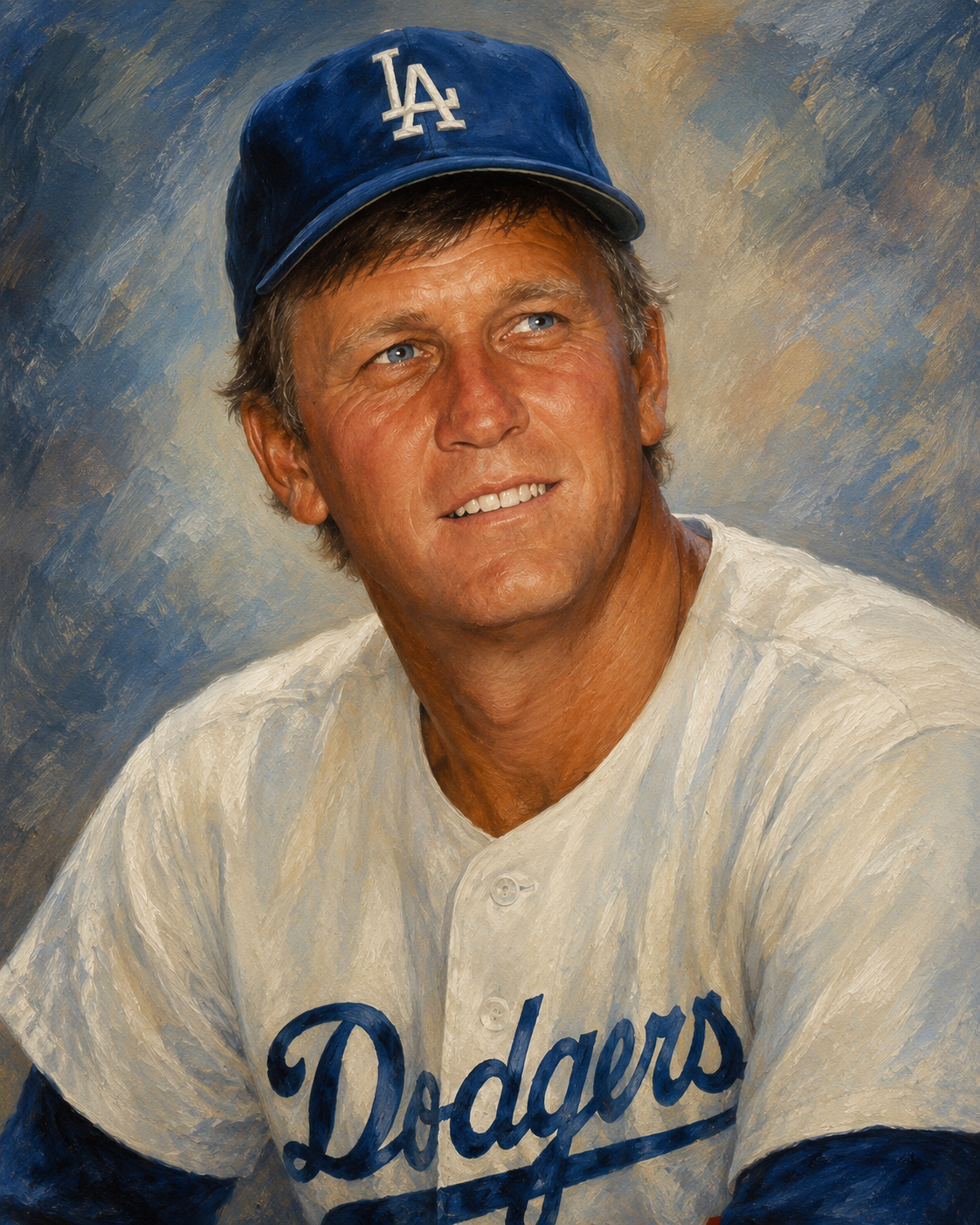
A trade to the Los Angeles Dodgers before the 1972 season brought John into one of the defining periods of his career. By 1974, at age 31, he was pitching some of his best baseball. He entered the All-Star break with a 13–3 record and was among the National League leaders in victories. Then, while pitching against the Montreal Expos, he severely damaged the ulnar collateral ligament in his left elbow. At the time, such an injury was generally considered career-ending for a pitcher.
Dodgers team physician Dr. Frank Jobe proposed an operation that had never before successfully returned a major-league pitcher to competition: replacing the damaged elbow ligament with a tendon taken from elsewhere in John's body. Jobe gave him extraordinarily long odds of pitching again. Without the operation, however, John essentially had no chance to continue his career. He chose the surgery.
On September 25, 1974, Jobe reconstructed John's UCL using the palmaris longus tendon from John's right forearm. Complications involving the ulnar nerve required another procedure, and John then began an arduous rehabilitation. He missed the entire 1975 major-league season while rebuilding his arm.
John returned to the Dodgers in 1976. Simply pitching again represented an unprecedented achievement; he went considerably further. He made 31 starts that season and finished 10–10 with a 3.09 ERA. In 1977, he produced the first 20-win season of his career, going 20–7 with a 2.78 ERA and finishing second to Steve Carlton in voting for the National League Cy Young Award as the Dodgers reached the World Series.
Rather than serving merely as an epilogue to his career, the surgery divided it almost evenly. John had won 124 major-league games before the operation. He won another 164 afterward.
After seven seasons with Los Angeles, John signed with the New York Yankees for 1979 and immediately won 21 games. He won 22 more in 1980 and remained a durable starter into his forties. His later career included time with the California Angels and Oakland Athletics, followed by a return to the Yankees. He made his final major-league appearance on May 25, 1989, three days after his 46th birthday.
Across 26 major-league seasons, John compiled a 288–231 record, a 3.34 ERA and 2,245 strikeouts while starting 700 games and pitching 4,710⅓ innings. He was selected to four All-Star teams and had three 20-win seasons. Remarkably, three of those four All-Star selections came after the elbow reconstruction that had once been considered a desperate attempt to save his career.