

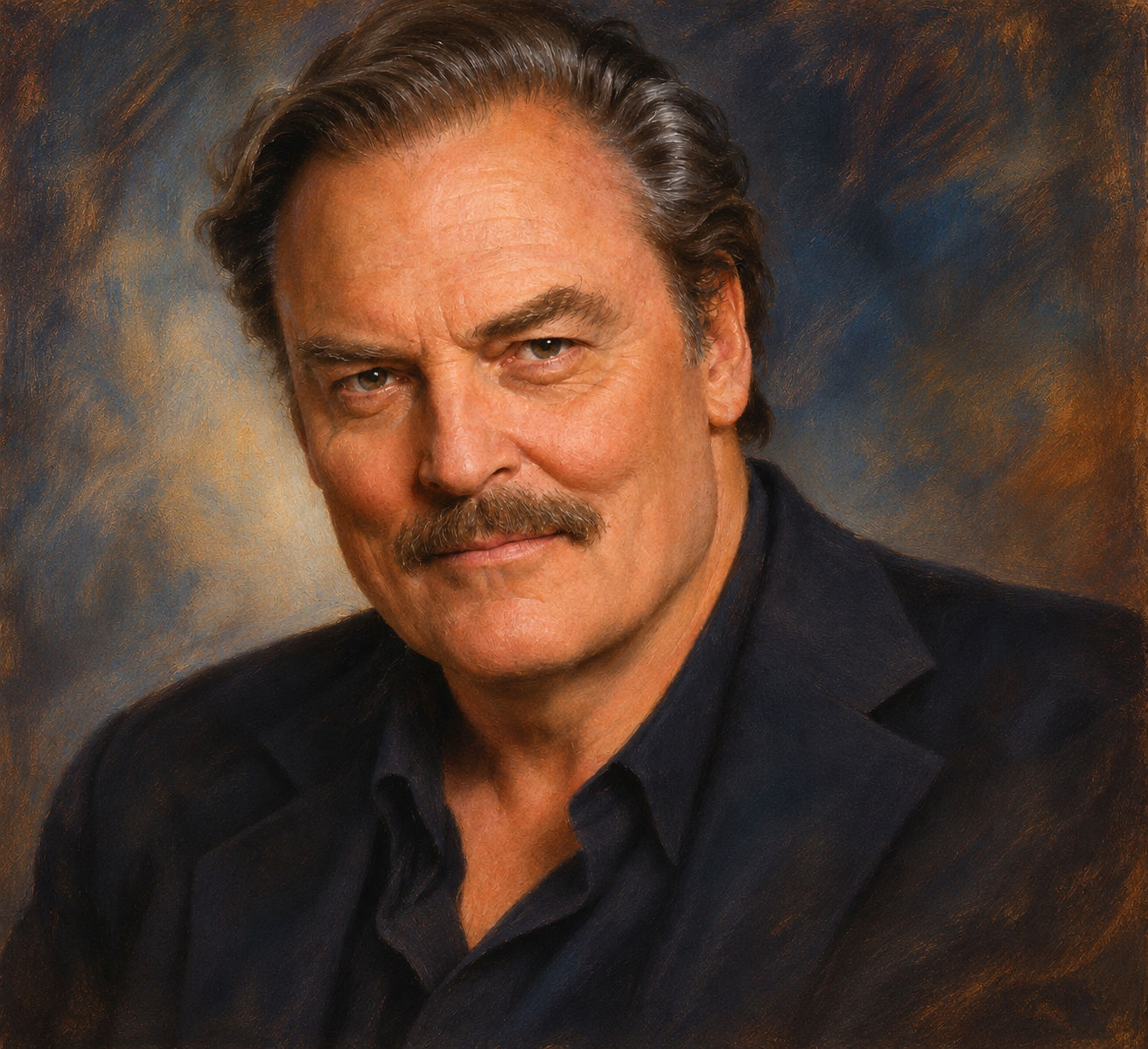
Walter Stacy Keach Jr. was born on June 2, 1941, in Savannah, Georgia, and grew up primarily in Southern California. The son of actor, director, and producer Walter Stacy Keach Sr. and actress Mary Cain Peckham, he was introduced to the performing arts at an early age.
Born with a cleft lip and palate, Keach underwent corrective surgeries during childhood. The experience presented challenges, but it did not prevent him from developing the distinctive appearance and commanding voice that would later become familiar to audiences around the world.
His early professional career centered on the stage. During the 1960s, he established himself as a formidable classical actor, particularly through his interpretations of Shakespeare. His performance as Buffalo Bill in Arthur Kopit's Indians earned him a Tony Award nomination in 1970, helping establish his national reputation.
Keach made his feature-film debut in The Heart Is a Lonely Hunter (1968). He subsequently appeared in a remarkable variety of films, including John Huston's Fat City (1972), The Life and Times of Judge Roy Bean (1972), Up in Smoke (1978), and The Long Riders (1980), in which he portrayed outlaw Frank James alongside his brother James as Jesse James.
Although already respected for his work in theater and film, Keach reached a much wider television audience during the 1980s when he took on the role of Mickey Spillane's hard-boiled private detective Mike Hammer. His portrayal combined toughness, humor, and a sense of personal justice, making the character one of his most recognizable performances.+
Keach married Polish actress Malgosia Tomassi, whom he met through his work on Mike Hammer. Their marriage became an important part of his later life, and they raised two children, Shannon and Karolina.
Throughout the following decades, Keach continued moving between theater, television, and film. His credits included American History X, Titus, Prison Break, Nebraska, and Blue Bloods. He remained deeply committed to Shakespeare, performing roles such as King Lear, Richard III, and Falstaff well into his later years.
His work also extended to narration, where his resonant voice became familiar through documentaries, television programs, and other productions. In 2013, he published his memoir, All in All: An Actor's Life On and Off the Stage, reflecting on his professional achievements, personal struggles, and the experiences that shaped him.
Across nearly six decades, Keach built a career distinguished by its range, moving comfortably between Shakespearean tragedy, American drama, comedy, television mysteries, and historical portrayals. His life also reflected an uncommon willingness to acknowledge personal mistakes and continue finding purpose in his work.