
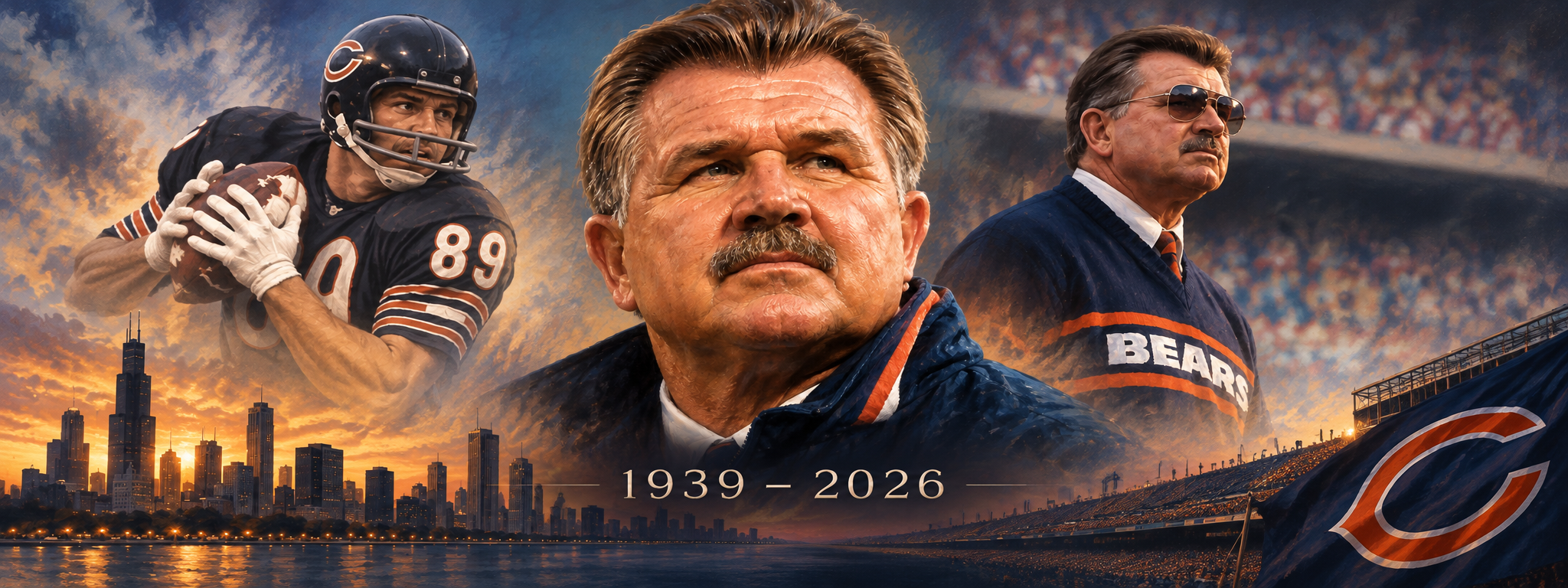
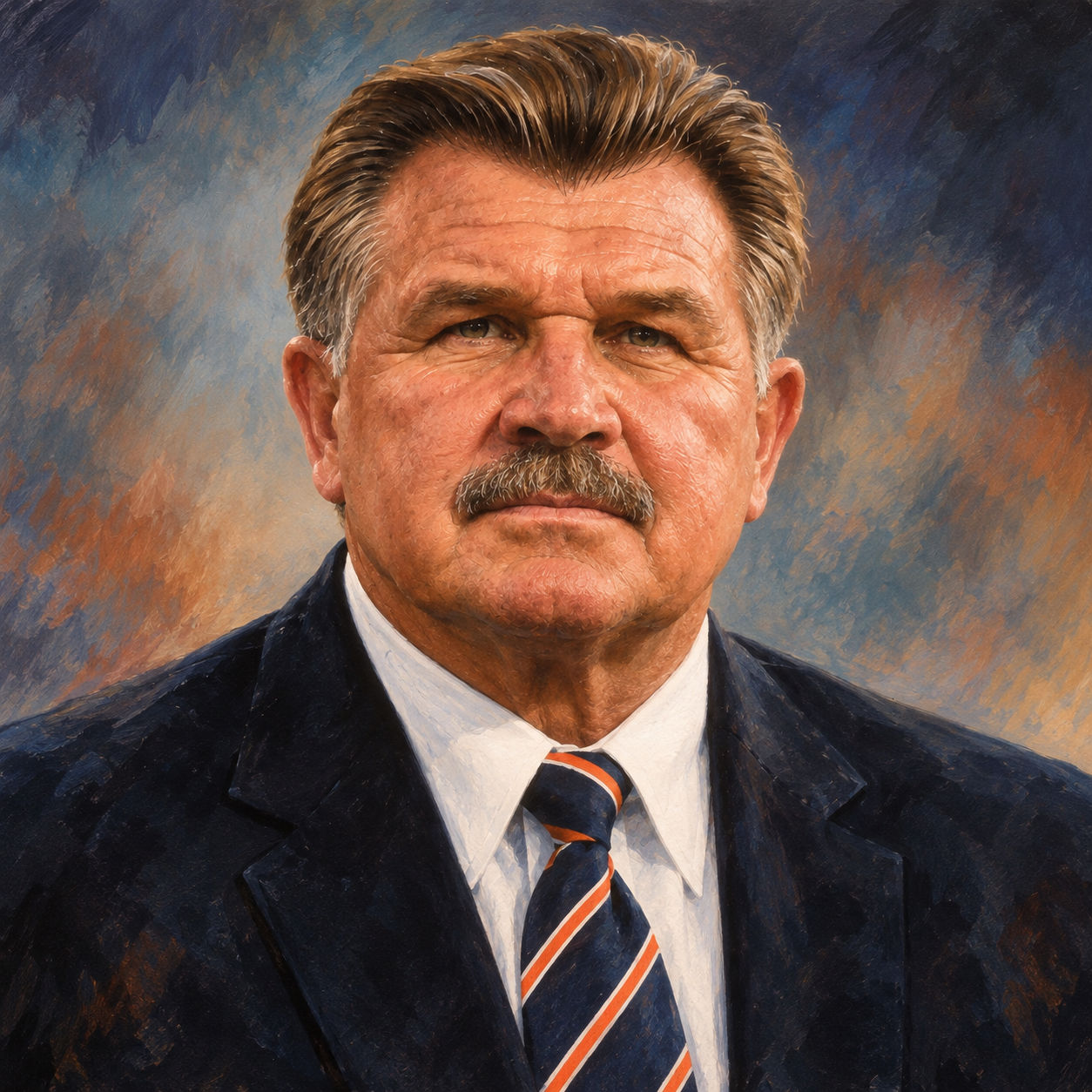
Michael Keller Ditka, known throughout the football world as “Iron Mike,” was an American professional football player, coach, broadcaster, and one of the most recognizable personalities in NFL history. His career spanned more than five decades, during which he helped redefine the tight end position, won championships in three different roles, and became an enduring symbol of Chicago football.
Ditka was born on October 18, 1939, in Carnegie, Pennsylvania, and grew up in Aliquippa, a steel-producing community near Pittsburgh. Born Michael Dyczko Jr., he came from a working-class family whose values of determination, discipline, and hard work would shape his approach to life and football. At Aliquippa High School, he excelled in football, basketball, and baseball, developing the physical toughness and competitive instincts that later became his trademarks.
He attended the University of Pittsburgh, where he became one of the country's outstanding college football players. From 1958 through 1960, he led the Panthers in receiving each season while also contributing as a defender and punter. As a senior, he earned unanimous All-America honors and finished sixth in Heisman Trophy voting. Although he initially considered dentistry as a career, his success in football ultimately led him in another direction.
The Chicago Bears selected Ditka fifth overall in the 1961 NFL Draft. Under legendary coach George Halas, he immediately demonstrated that a tight end could be much more than an additional blocker. During his rookie season, Ditka caught 56 passes for 1,076 yards and 12 touchdowns, becoming the first NFL tight end to surpass 1,000 receiving yards in a season. He earned Rookie of the Year honors and began a streak of five consecutive Pro Bowl selections.
Ditka helped the Bears win the 1963 NFL Championship before moving to the Philadelphia Eagles in 1967 and the Dallas Cowboys in 1969. With Dallas, he contributed to the team's victory in Super Bowl VI, catching a touchdown pass in its 24–3 win over the Miami Dolphins. He retired after the 1972 season with 427 receptions, 5,812 receiving yards, and 43 touchdowns.
His playing career ended, but his involvement in football was far from over. Ditka joined Tom Landry's coaching staff in Dallas in 1973, spending nine seasons learning from one of the NFL's most respected coaches. He was part of the Cowboys' coaching staff when they won Super Bowl XII.
In 1982, Ditka returned to Chicago as head coach of the Bears. He inherited a franchise that had struggled to recapture its earlier championship success and established a demanding, intensely competitive environment. His leadership, combined with a remarkable roster and defensive coordinator Buddy Ryan's innovative defense, produced one of the most memorable teams in NFL history.
The 1985 Bears finished the regular season 15–1 and dominated their postseason opponents, defeating the New England Patriots 46–10 in Super Bowl XX on January 26, 1986. The championship cemented Ditka's place in Chicago sports history.
His tenure with the Bears continued through 1992. He later returned to head coaching with the New Orleans Saints from 1997 through 1999. Although his years in New Orleans were less successful, his coaching career established him as one of the few individuals to win Super Bowls as a player, assistant coach, and head coach.
Outside coaching, Ditka became a familiar television personality, appearing as an NFL analyst and making appearances in entertainment and advertising. His unmistakable voice, prominent mustache, glasses, and outspoken personality made him recognizable even to people who rarely watched football.
He also pursued business ventures, including restaurants, and remained connected to charitable efforts and the communities associated with his career. His personal life included his wife, Diana, and four children.
Ditka was inducted into the College Football Hall of Fame in 1986 and the Pro Football Hall of Fame in 1988, becoming the first player inducted primarily as a tight end.